
This is the second blog in a three-part series about our honeymoon safari. For an overview of our trip, see my first blog: Ultimate Guide to Planning A Safari Honeymoon.
Nairobi
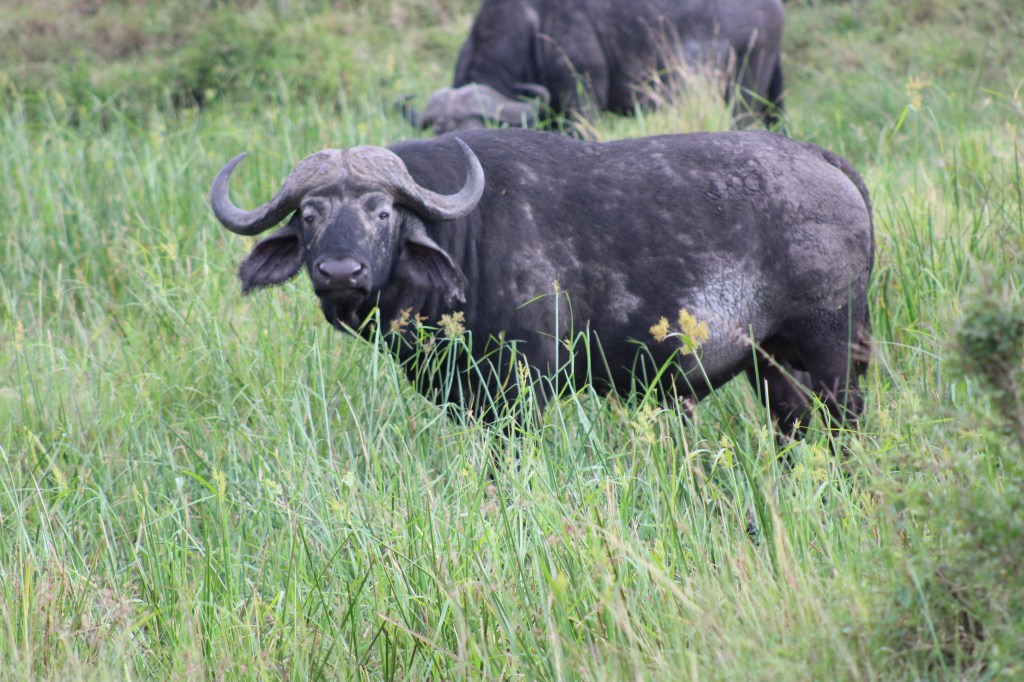
We arrived mid-day in Nairobi. A driver from Gamewatchers met us at the airport. As we drove out of airport parking, we saw zebras grazing in the medians. On the drive to our hotel, we crossed the first of the Big Five off our list – Cape buffalo grazing in the Nairobi National Park. They appeared to be so large in the distance that I thought they were elephants.
After we checked into the Tamarind Tree Hotel, we took an Uber to the Bomas of Kenya, a cultural center. For $20 admission, you can tour an impressive display of the different types of homesteads in Africa, and watch one of the daily traditional music and dance shows. We saw more wildlife here – warthogs grazing the grounds and baboons keeping guard from the roof. We spent about 2.5 hours there, but could have taken more time for dinner and to watch the dancing. If you have a half-day only to spend, we recommend it.
Back at the Tamarind Tree, we had cocktails at the excellent lobby bar, and then walked the short distance across the grounds to Carnivore restaurant. It’s like a Brazilian steakhouse where servers bring different cuts of meat and you choose which ones you’d liked to try – only Kenyan style. You can eat crocodile or ostrich in addition to lamb and beef. (We’ve heard they sometimes have antelope, but not the night we were there.)
Carnivore’s lighting is rich and warm; the decor is textured, with earthy shades of red and brown. We had our first taste of the Dawa, a delicious Kenyan cocktail with vodka, lime, honey and sugar. Before we could return to the hotel, we had to wait for one of the hotel staff to escort us, in case of wildlife. That was when I truly realized we were in a different world than DC.
The next morning we left for the Wilson airport; it’s the smaller one, for in-country flights. Our driver stuck with us until we got through security, and made sure we knew where to catch our flight. While we waited, we had coffee and pastries at the airport cafe.
We had two short flights in small aircraft to the Masai Mara. Flying around in the bush was sort of like taking the bus or metro. We had more than one stop to let other passengers board and exit, and had to make sure to get off to change planes in the right place. But the flight attendants were very helpful and took care of us.
When we descended for our final stop, I saw elephants and giraffes on the savannah below us from the air. It felt like I was watching a documentary or a movie about someone else’s life. It was absolutely unreal, and nothing on camera could have prepared me for Africa’s beauty.
Masai Mara
Our guide John Paul met us at the Masai Mara National Reserve airstrip in a Land Cruiser. He would be our driver and it would be our car for the entire three days stay. John Paul was a young Maasai man, soft spoken and an expert on many things, from camera settings to navigating small ravines in a bush vehicle to the lives of lions and cheetahs. Most days, he wore his red plaid shuka (over a fleece or pants when it was cool out.)
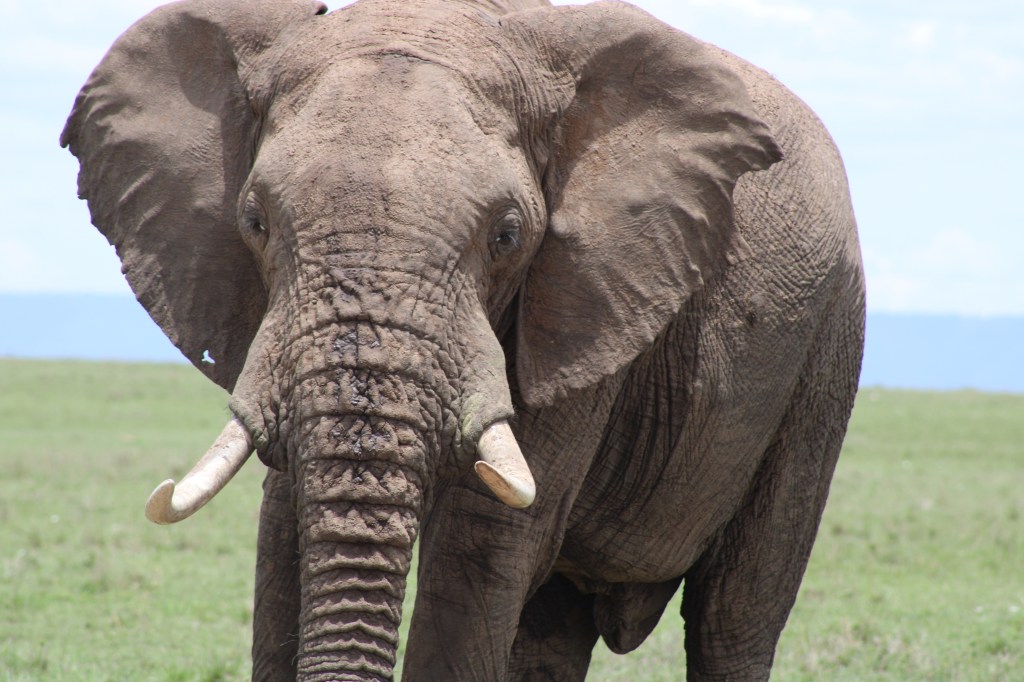
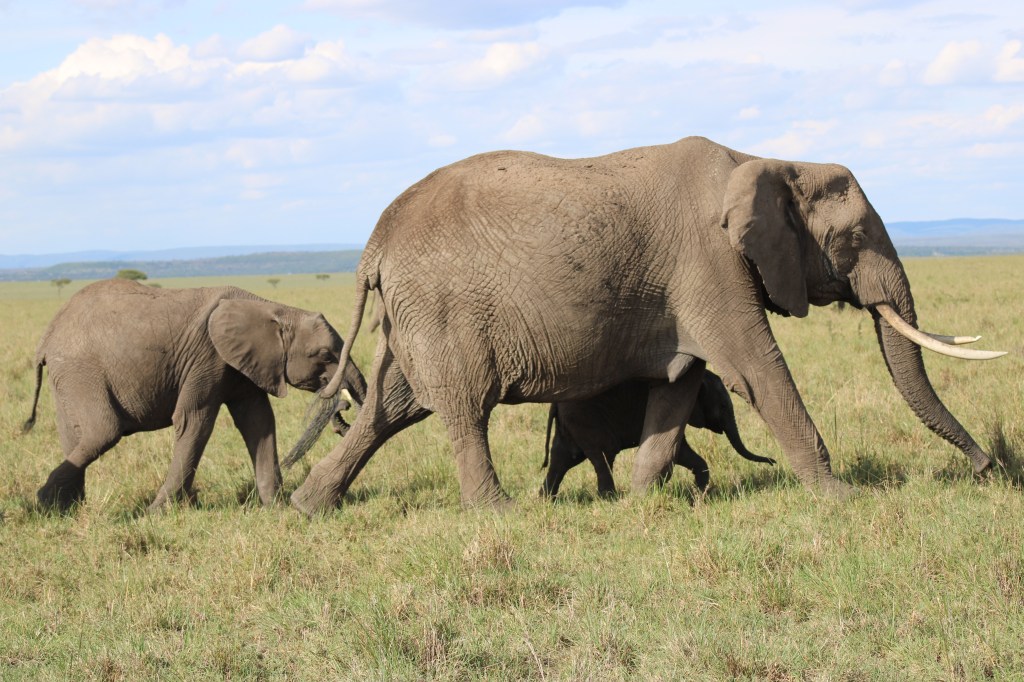
On our very first drive across the savannah John Paul drove us right up to see the animals, like our first elephant, a lone bull (pictured above). Before we even arrived at the camp, we saw zebras and gazelles, baboons and wildebeest, and an eland (the largest type of antelope.)
Ilkeliani Camp
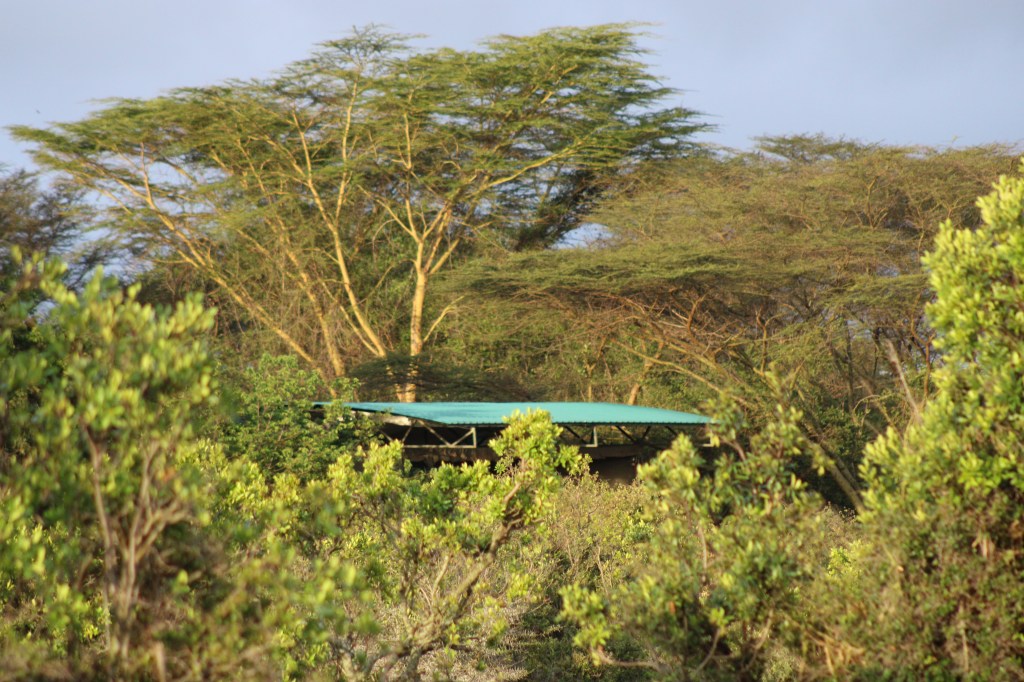
John Paul parked the Land Cruiser on the banks of a river, and we crossed over a swinging bridge to our camp. It was named ‘Ilkeliani,’ which means ‘young Maasai warrior.’
After dinner each night, a Maasai warrior with a lantern and a staff escorted us back to our tents through the darkness, and again in the morning for our pre-dawn game drives. At night, hippos roamed the banks of the river where our camp was located, but in the daytime, the wildlife stayed away, and we were able to move about freely.
The main tent was like any hotel lobby, with couches, gift shop, and a dining area. Everything could be enclosed with screens that were zipped down around the pavilion when needed.
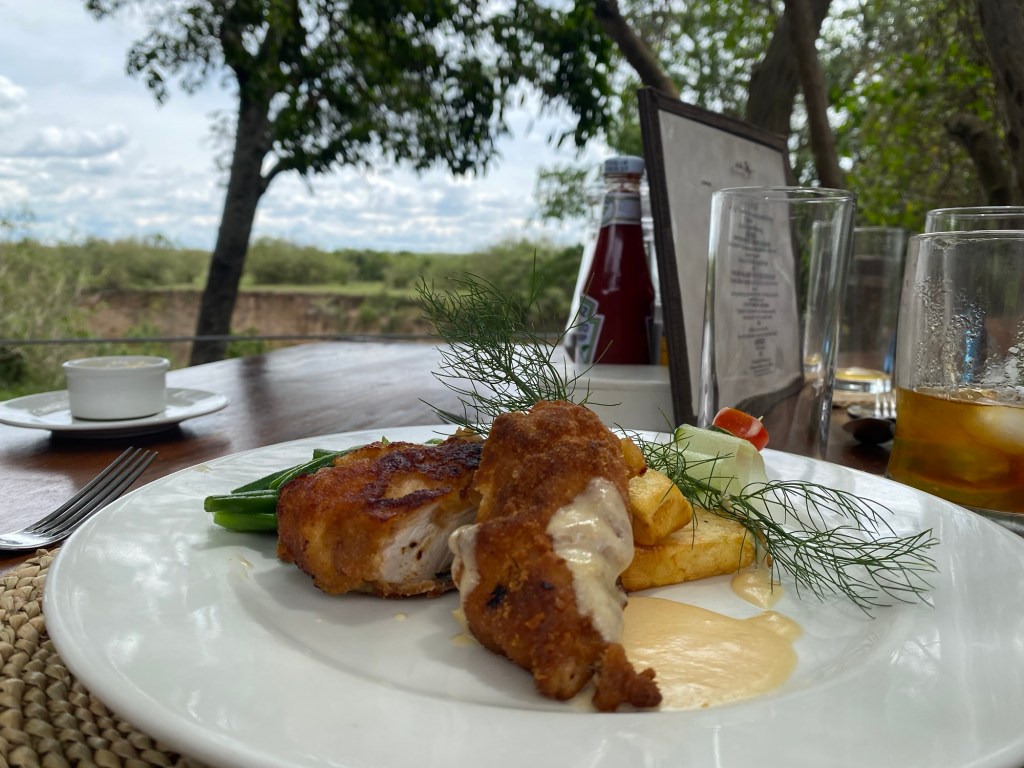
Meals at Ilkeliani Camp were excellent. They grew fresh produce on site for the kitchen. Martin was our server for most of our stay. When I had a sore throat the second day, he specially-prepared hot herbal tea with lemon and honey for me; I felt so cared for.
Breakfast and dinner took place inside the dining pavilion, and lunch was on the deck with a view of the savannah. We saw giraffes, antelopes, and zebras grazing across the river every day. The menu changed daily with a selection of two or three choices for lunch and dinner, with at least one vegetarian option. Breakfast was a buffet, though we often had tea and biscuits in our tent and did not always return from game drives in time for the full meal.
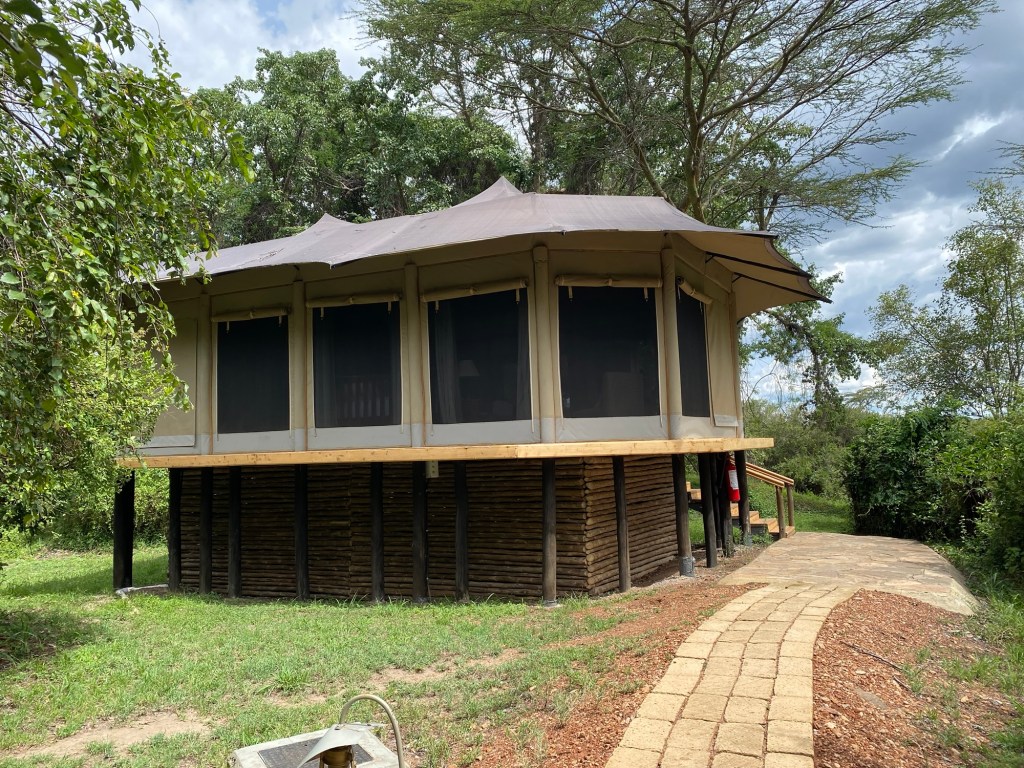
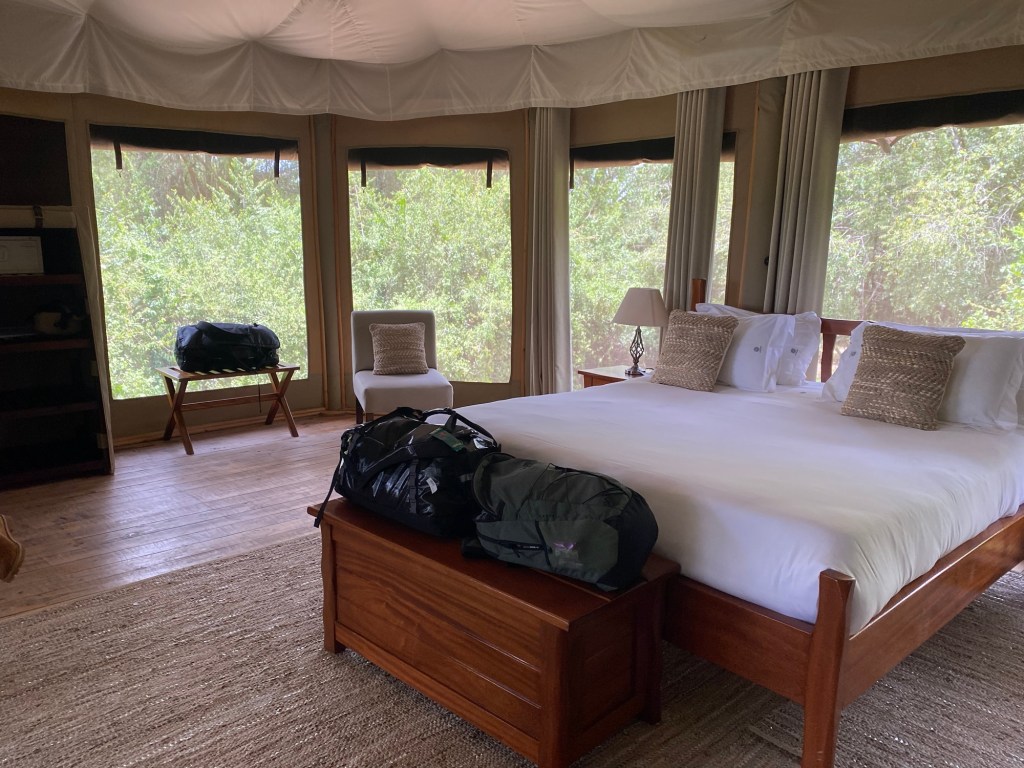
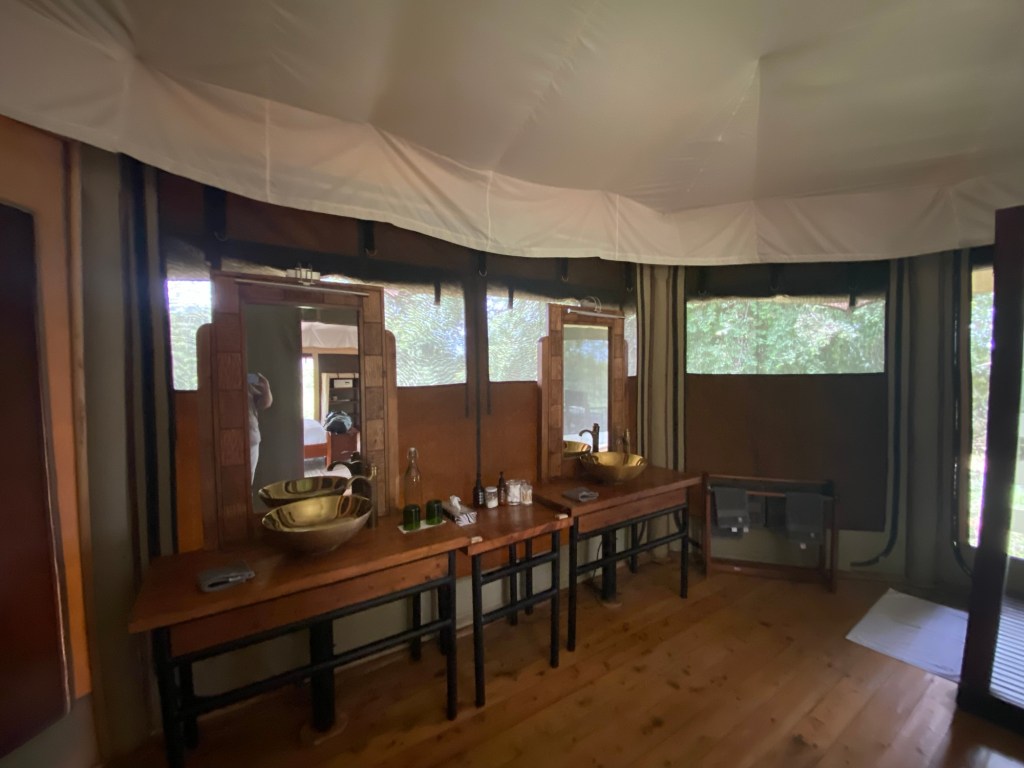
Suffice it to say, Ilkeliani is the most luxurious camp I’ve ever been to or expect to see again.
Game Drives
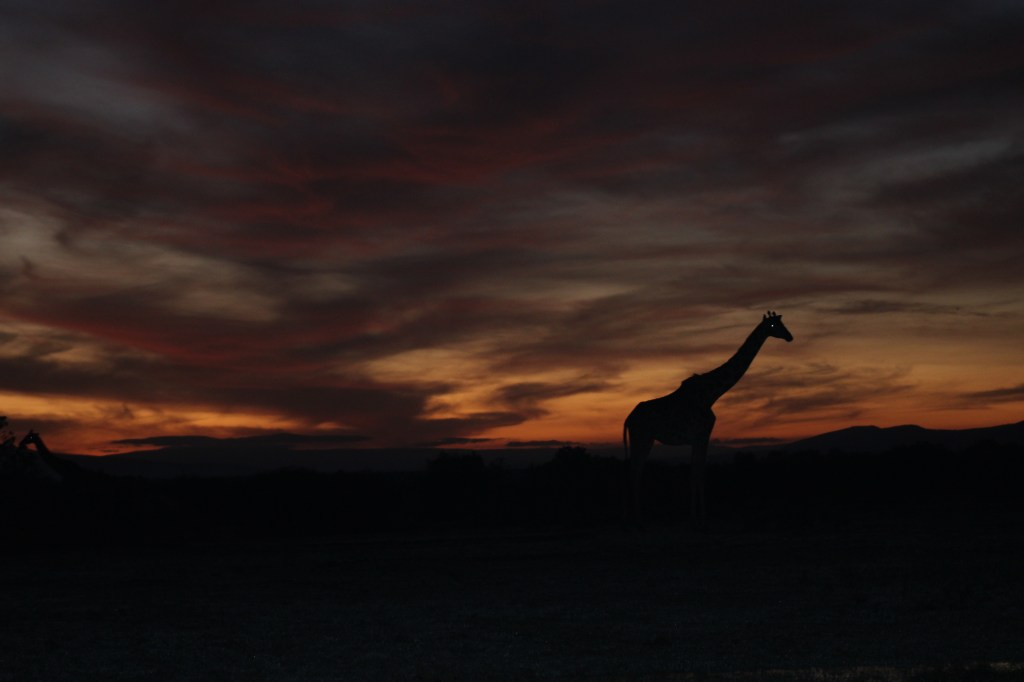
Each morning we went out on a game drive for an hour or two and came back for breakfast, or stayed out until lunch time. John Paul always checked ahead to see what we preferred. In the Masai Mara, drivers can go off road across the savannah. This is different from the Serengeti and Ngorongoro Crater, where cars must stick to the road. It makes a huge difference, because you can get much closer to the animals.
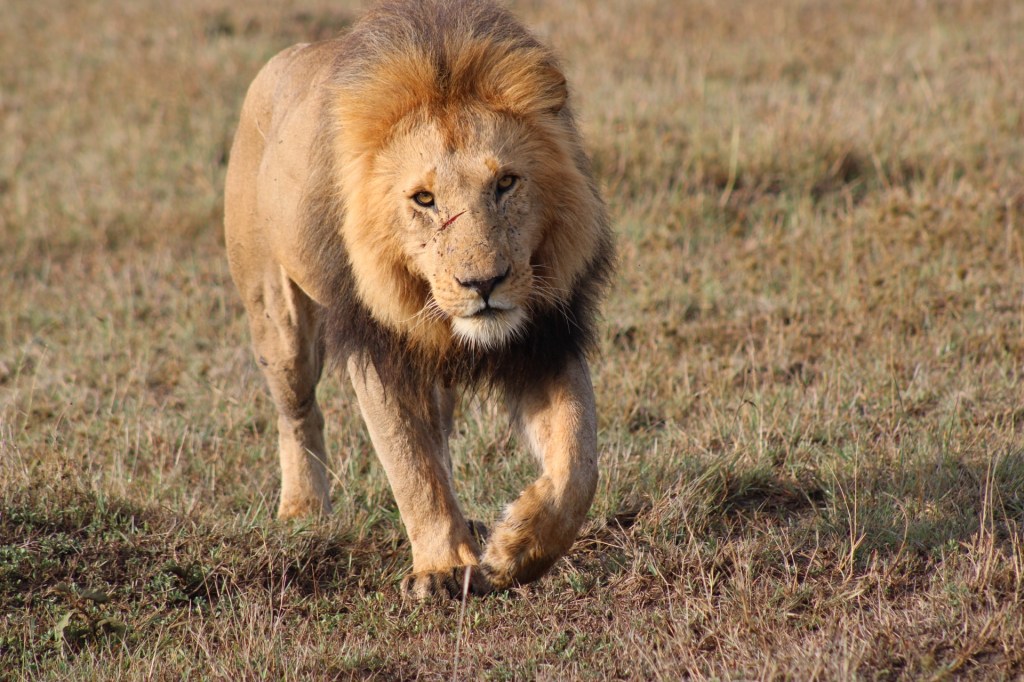
Early morning is the best time to see big cats. Our second day, we saw a pride of lions just after they finished eating their kill. They crossed the road right in front of our Land Cruiser – first, the lionesses with the cubs, then the dominant male, followed by the subordinate male (in the top picture).
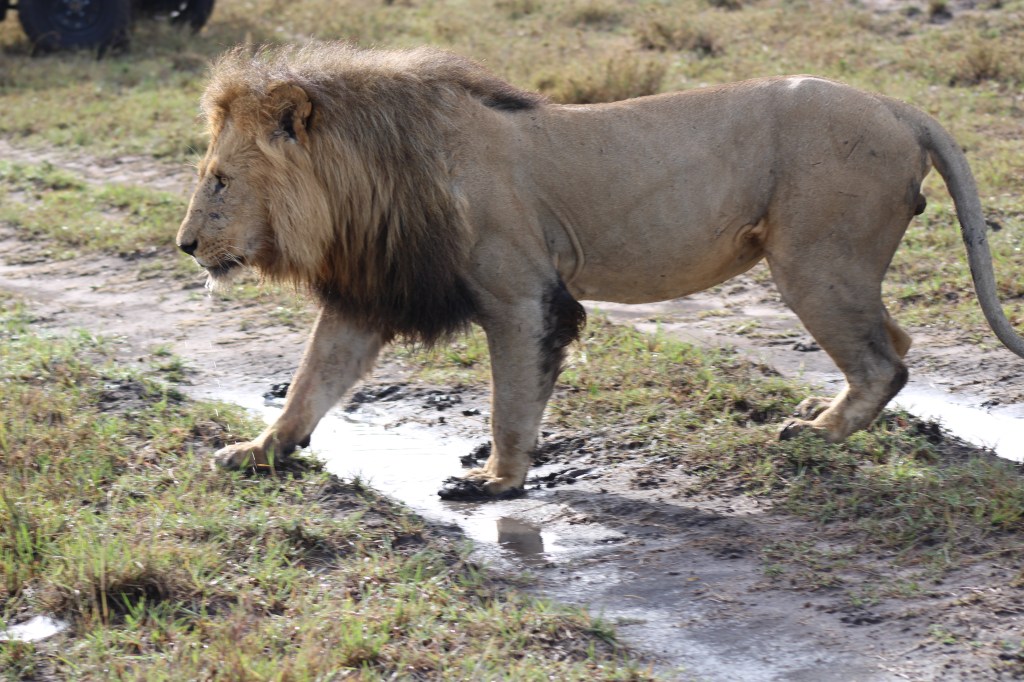
When they saw the pictures, our families wanted to know how close we actually were to the lions. The zoom lens makes it seem very close, but we were able to get within ten feet with the Land Cruisers. The animals on the Masai Mara treat the vehicles like part of the scenery, or annoying paparazzi they choose to ignore. As long as no one leans out of the car or behaves unusually, and the vehicles look similar to the ones the animals are used to, the animals don’t feel threatened. You can see an example in the picture below, where the lion is passing between us and another tour vehicle.
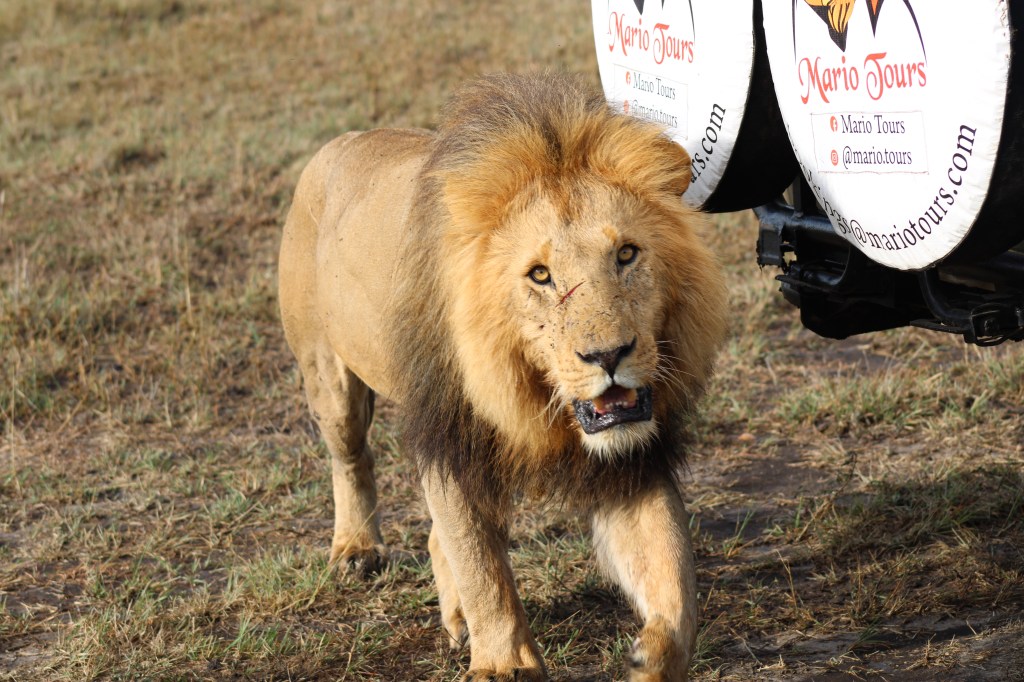
After lunch and naps, we went out again for our second game drive of the day from late-afternoon to dusk. Then the lions could be found sleeping in the shade, and we were able to approach very close.
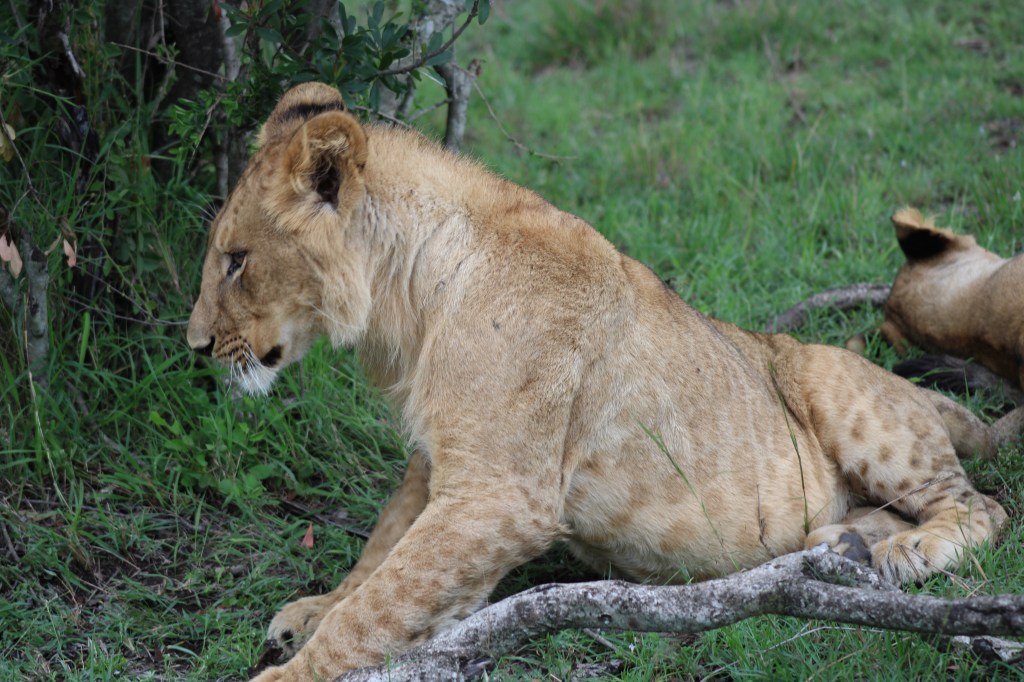
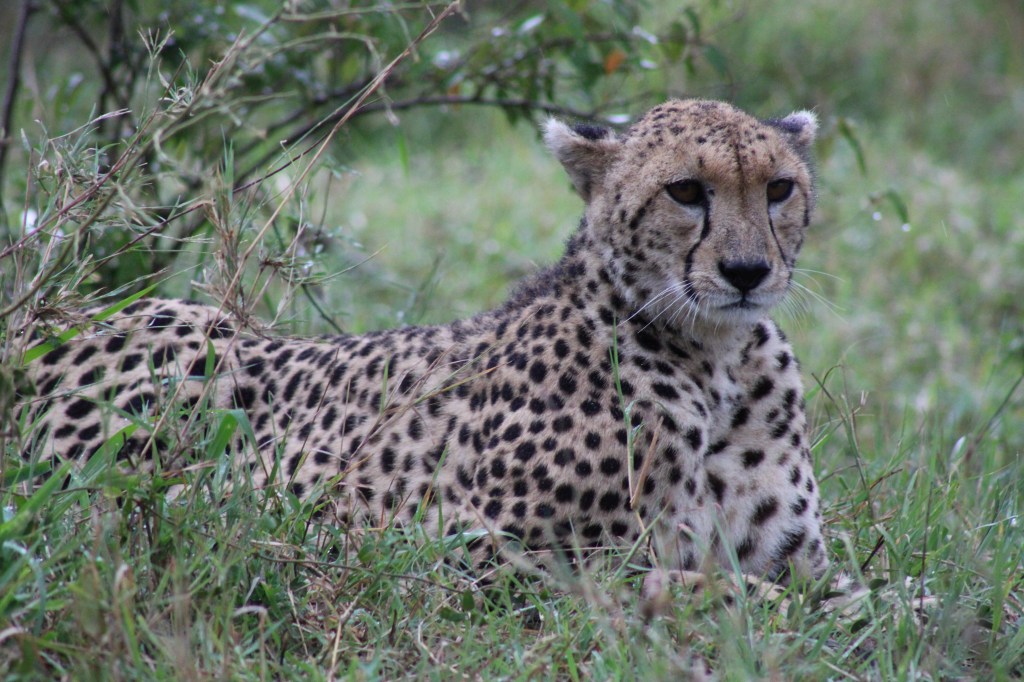
John Paul explained to us about the secret to the lions’ success as predators. Their family structure helps them to survive, as well as their relative strength and size compared to the cheetah, for example. Only it’s sad that the young male cubs are inevitable driven out of the pride when they get big or when a new dominant male takes over, to find new prides of their own or be killed, if they hunt alone for too long.
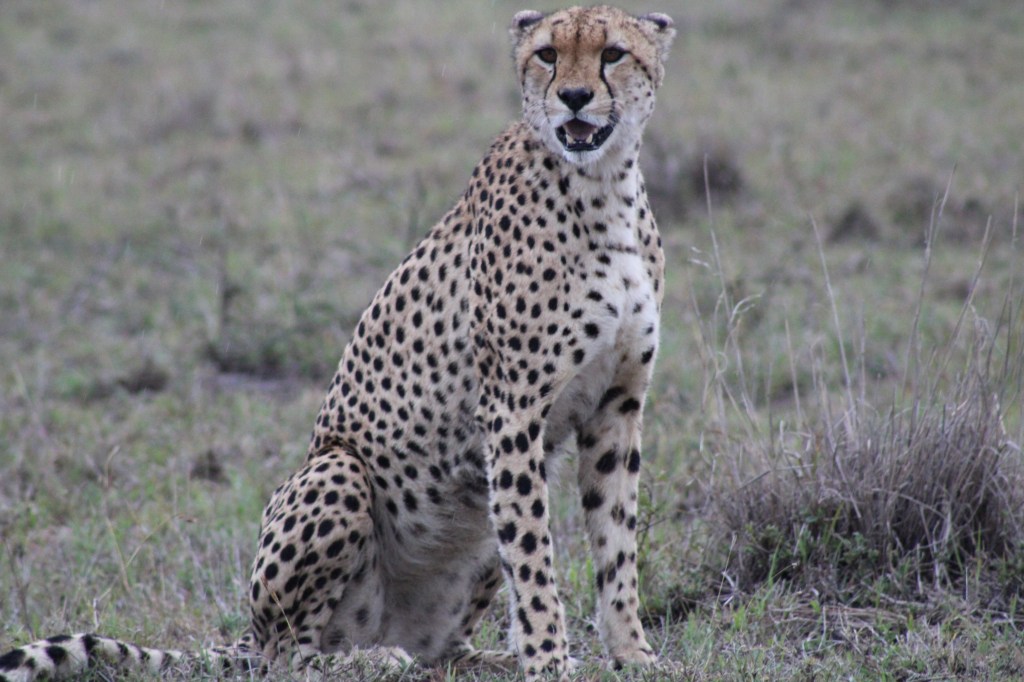
In comparison, cheetahs have a harder time surviving. They’re smaller and so they are often killed by lions, to keep the competition down. We found the cheetah in the picture above crying out on the savannah; John Paul told us he seemed distressed, and was most likely looking for his sibling; there had been a group of four of them, and then there were only two.
They haunt your mind, these animals. Two years later, I’m still wondering what happened to the cheetah who lost his brother; imagine how deeply they’re ingrained in the psyche of people who saw them every day, like John Paul.
One of my favorite encounters was the bull elephant in the picture below. John Paul parked the Land Cruiser at a distance to watch him. I guess we were in his preferred path, because he came right toward us. John Paul moved us out of the way, just in case. But the elephant barely looked our way as he passed. His trunk is most likely broken from trying to rip into a tree, to access the nutrients and moisture in the bark.

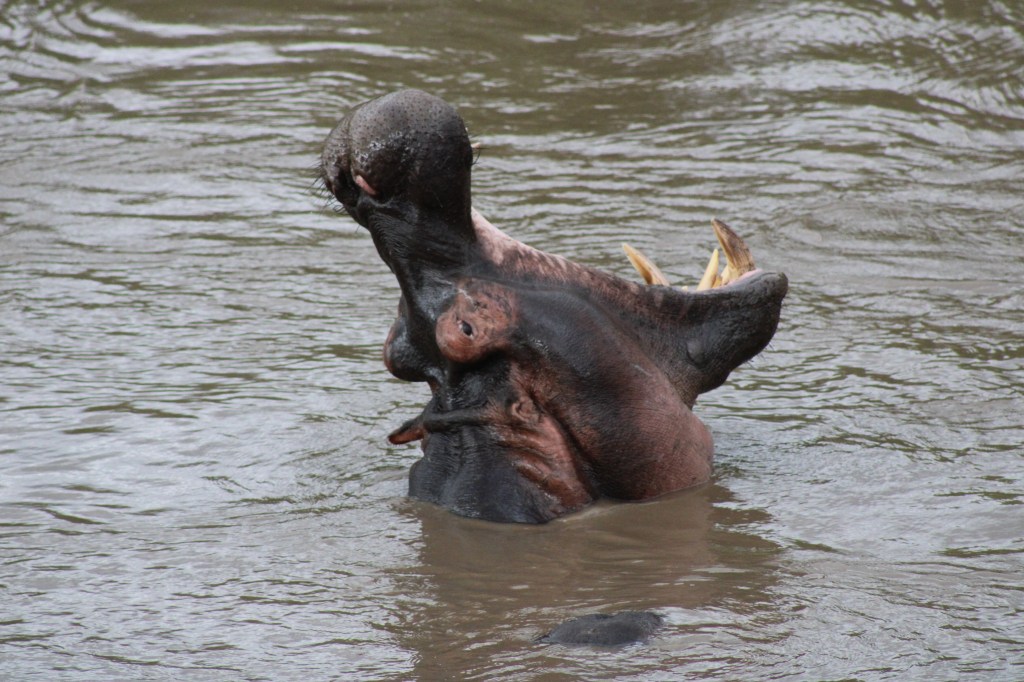
One evening, we drove to the hippo pool. That was the only time we were allowed out of the Land Cruiser. On our side of the river, the bank was high and steep, and the hippos never used it. But if we had approached from the other side, John Paul said they might attack. They are the most dangerous animals in the bush, because they are so territorial. They make terrible models because they mostly stay underwater except for their little ears; occasionally, one will surface long enough for a good photo.
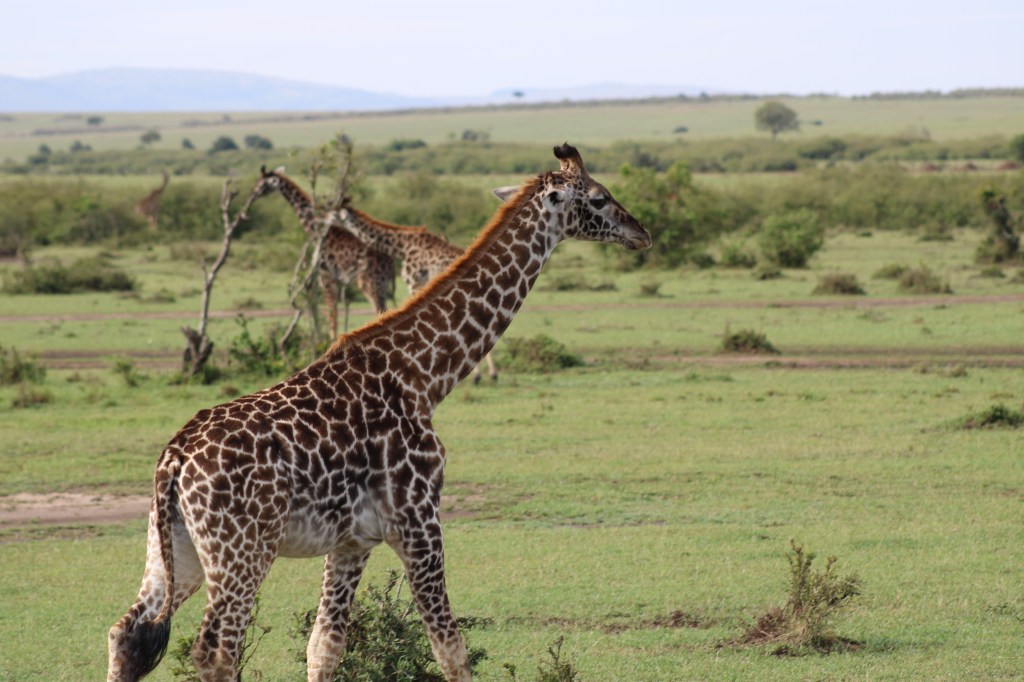
We saw less familiar animals, like the topi, the eland, and the hartebeest; several types of eagles, cranes, and similar long-legged birds. In the mornings, we saw hyenas and jackals, finishing off the lions’ kills from the night before, or one of their own.
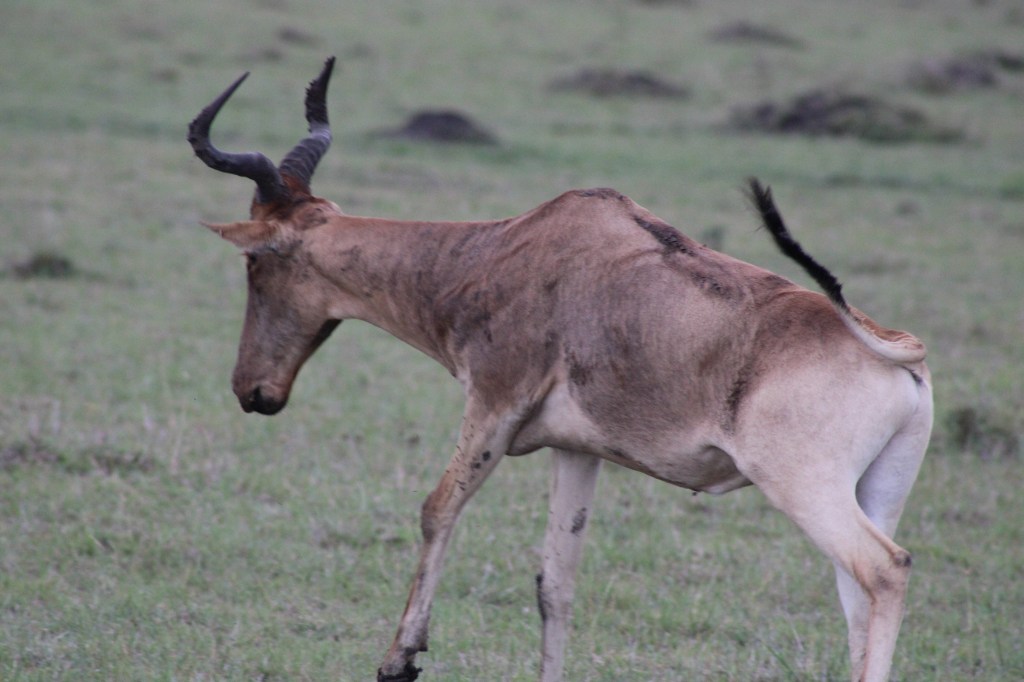
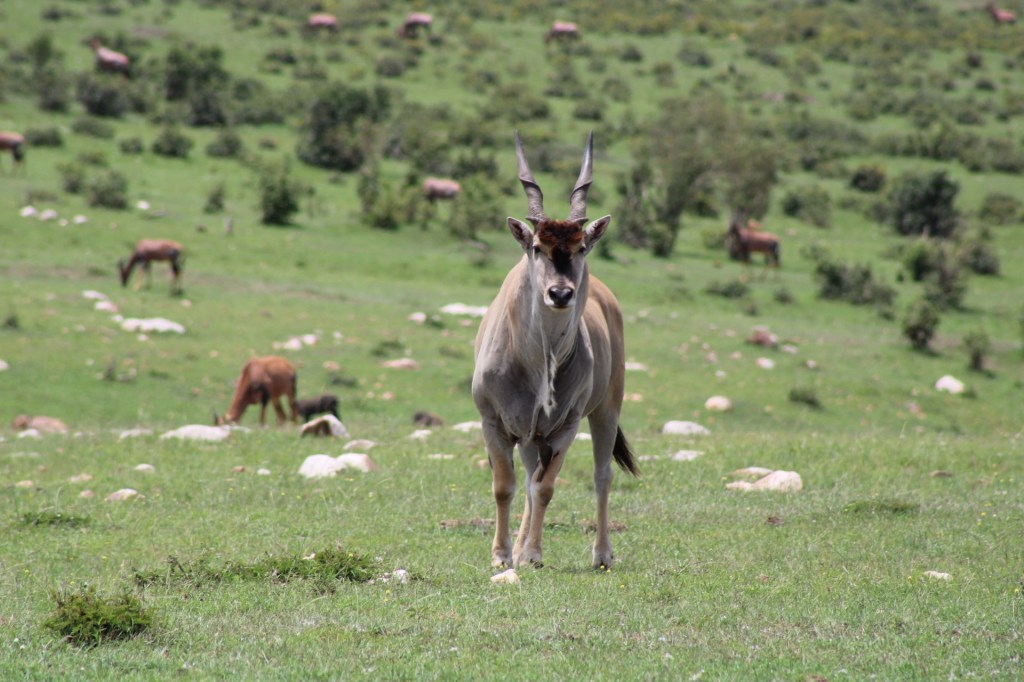
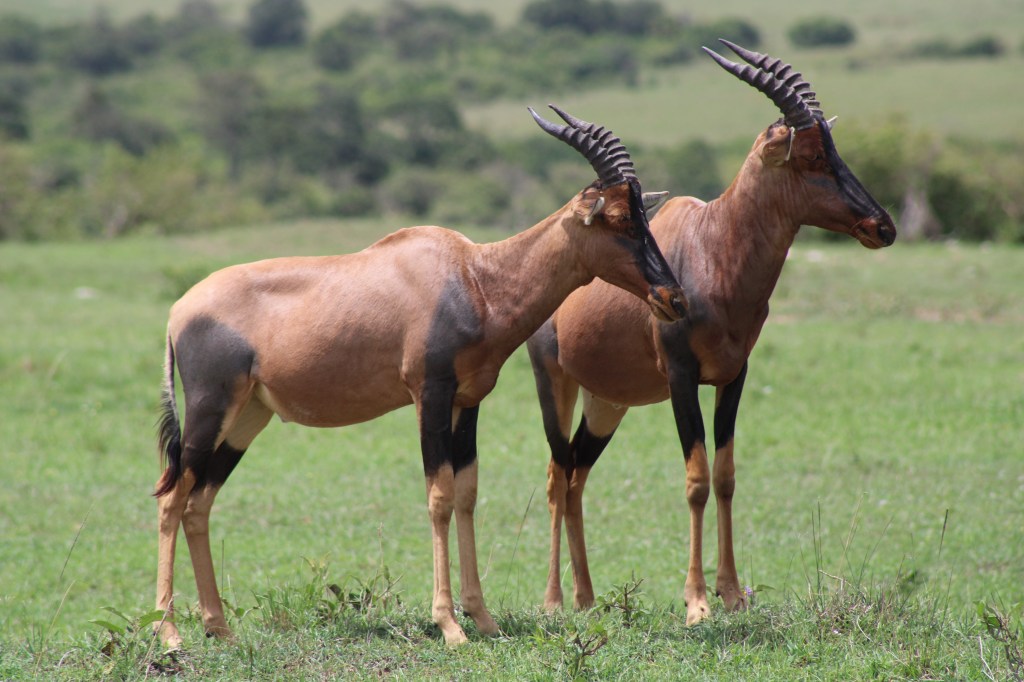
Maybe it doesn’t seem romantic to spend one’s honeymoon in the back of a Land Cruiser, watching hyenas eat a zebra for breakfast. (Well, not when I put it like that.) I will try to explain why it was:
It’s you and your new mate, surrounded by the animals and their mates; living, dying, eating, and raising their young. You’re exposed, but you’re safe, with four wheels to get away, and zippable canvas windows and metal roof bars between you and the wild. And your guide, who knows every blade and branch on an infinite plain, who can tell you more about the animals than you could ever tell him in return about HOAs or bus lines or where they are going to put the new Trader Joe’s.
It’s wild and magic, and there’s nothing more romantic in the world.
Visit to the Maasai Village
Instead of napping one day, we went to visit the Maasai Village. This was one of the options available to guests, for a reasonable donation fee to be paid directly to the village chief.
Joshua, one of the senior staff who was also a Maasai man, walked us through the camp to the village, where we were greeted by a welcoming committee, including the chief and some other warriors. Joshua translated for us.
First, we were treated to a jumping demonstration. It’s a traditional competition for Maasai men. They do it straight-backed, like below.
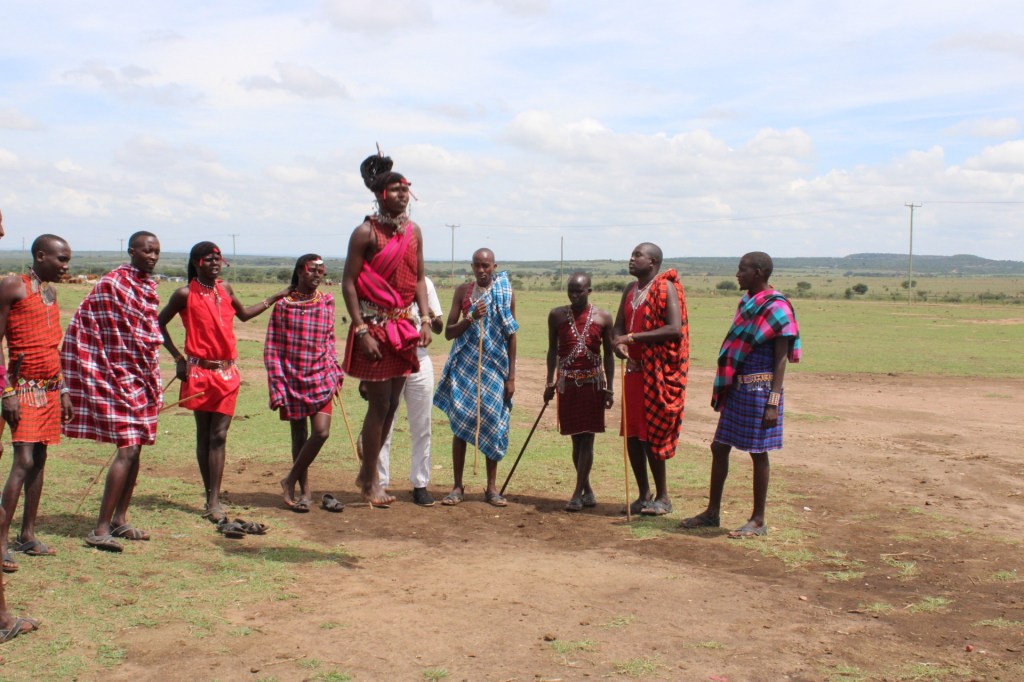
Then, the men and women of the village, in separate groups, each sang us a song, inviting us to participate. They showed us their homes, small dwellings of clay with few windows for light, dark to keep cool in the heat.
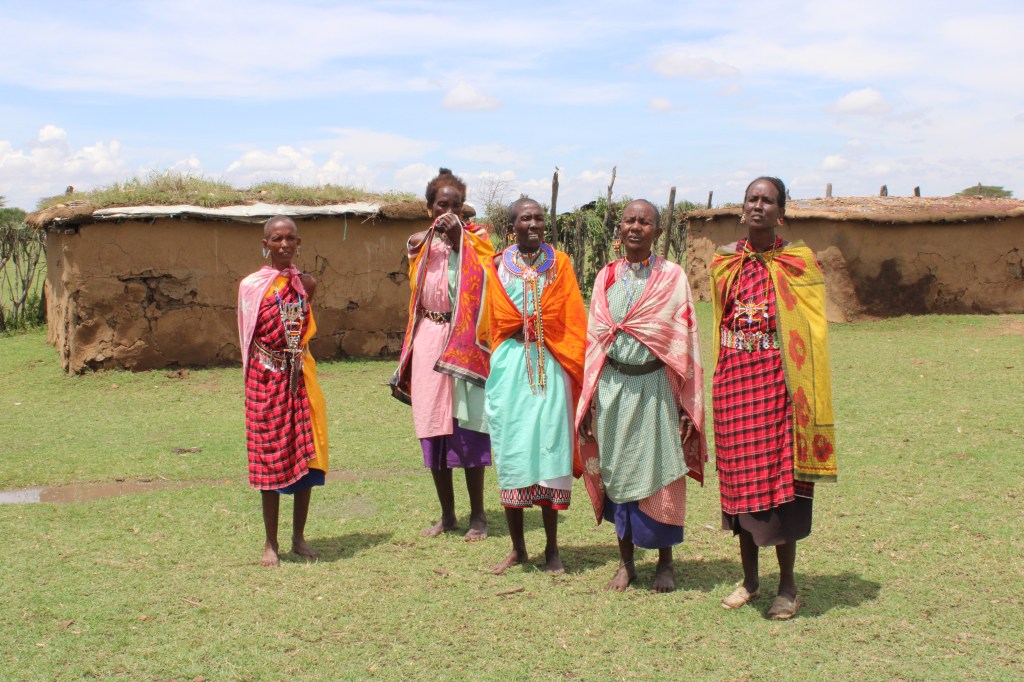
Since the tour is available for all guests of Ilkeliani Camp, I wondered how many times each day or week the village is visited by foreigners. We were the only two people in our group, but the villagers still welcomed us and took special care to explain their way of life. I think this wasn’t just because of the potential income from fees and the sale of handmade souvenirs (we purchased a few items after our tour.) I think it was important to them to show us the Maasai way of life.
On the walk back to camp, we passed villagers playing soccer in the field near town. We walked through a large herd of cattle, perhaps the most important part of Maasai life. Grazing is carefully managed in the Masai Mara reserve, to protect wildlife. A couple of times we drove through a large herd in our Land Cruiser, on our way out to the savannah.
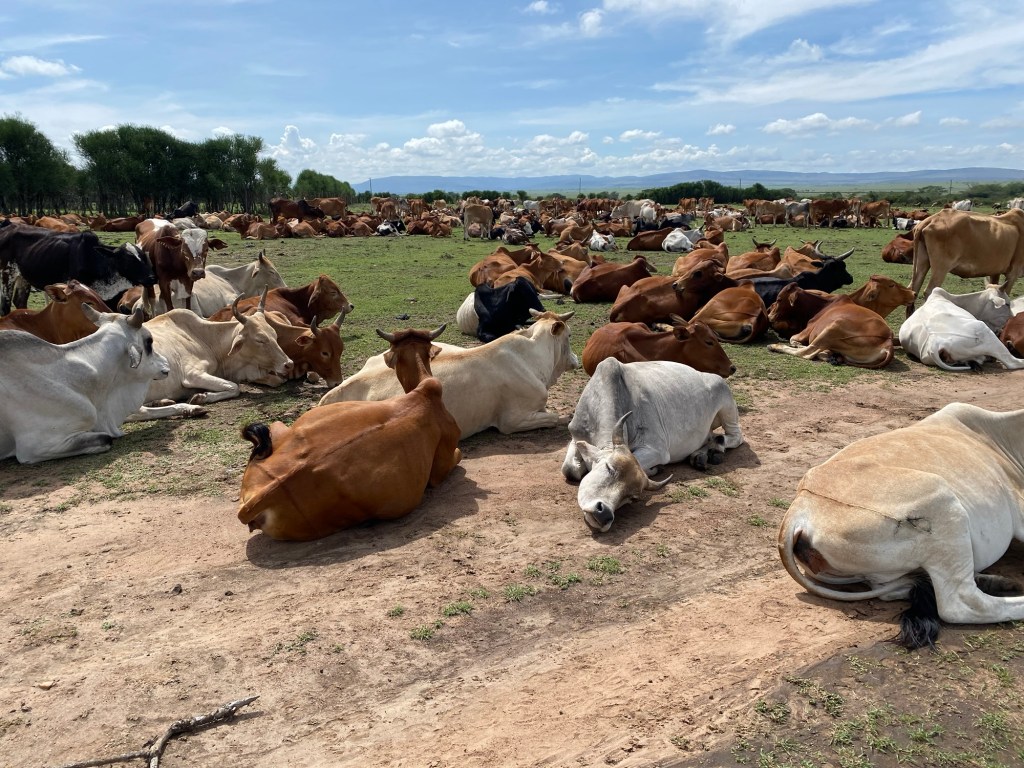
Although we came to Kenya for the wildlife, I was glad that Ilkeliani Camp allowed us an opportunity to learn more about the Maasai people.
Looking for Leopards
One day, Joshua joined us on our game drive; John Paul said he was good at finding leopards, the only one of the Big Five we hadn’t seen yet, besides the rhino. We crept around the edges of rivers and creek beds, where acacia trees grew. Joshua scanned the tree branches with his binoculars, where the leopards could often be seen. He had changed from the all-white pants and trousers he wore on our visit to the village, into his red plaid Maasai robe; we almost didn’t recognize him at first.
We never did see a leopard, but we enjoyed that game drive with John Paul and Joshua. They didn’t tell us much about their personal lives, and we didn’t ask, or talk about ourselves. Out on the Mara, only the savannah felt real and important. It is a different way of getting to know someone, inhabiting a Land Cruiser to stalk animals, not as prey but as blessed observers of their slow and urgent lives.
What we missed:
Other than the leopards, there were a few things we didn’t get around to seeing. We heard the elephant orphanage in Nairobi is a must, but we didn’t have the time.
We signed up for a hot air balloon tour, like the one in the blog’s featured image. It was an expensive extra, but we had received cash for wedding gifts for just such an occasion. Unfortunately, March was the nearly the end of balloon season; the morning that we went, the winds and rain were too dangerous, and the trip was cancelled. (And our money fully refunded.)
When John Paul finally drove us back to the airstrip, we were sad to go. But fortunately, it was not time to end our adventure yet. Tune in for my next blog (probably in about a week?) for the story of our time in Tanzania and more animal pictures. We have hundreds and it was hard to pick just a few for this blog!

 dink Travelers
Leave a comment